UK Signals Evidence Based Harm Reduction Approach on Nicotine Pouches
London, January 2026
The United Kingdom has quietly but clearly reinforced its reputation as one of the world’s most pragmatic public health regulators by acknowledging that nicotine pouches are likely to pose substantially lower health risks than smoking cigarettes when used as a substitute.
In recent correspondence from the Department of Health and Social Care, officials referred to toxicological advice indicating that oral nicotine pouches, which deliver nicotine without burning tobacco, may reduce risks for adult smokers who switch away from cigarettes. While the government stopped short of promoting nicotine use, the message reflects a long held scientific understanding that the greatest harm from smoking comes from combustion, not from nicotine itself.
This position places nicotine pouches more firmly within a distinct regulatory category and signals a broader policy direction that prioritizes smoking reduction while maintaining safeguards for young people.
Why Combustion Matters
For decades, medical research has shown that smoking related diseases are driven primarily by the inhalation of toxic by products released when tobacco is burned. These include tar, carbon monoxide, and thousands of harmful chemicals linked to cancer, cardiovascular disease, and respiratory illness.
Nicotine pouches remove combustion entirely. They are smoke free, vapor free, and inhalation free. By delivering nicotine orally rather than through smoke, they avoid exposure to the substances most closely associated with smoking related harm.
The Department of Health and Social Care cited work from the Committee on Toxicity, which found that nicotine pouches, when used as intended and as a replacement for smoking, may reduce health risks for smokers. At the same time, officials were careful to stress that nicotine remains addictive and that these products are not risk free.
Regulation Without Overreach
Rather than moving toward prohibition, the government emphasized the need for proportionate regulation. Officials warned that excessively restrictive rules on lower risk alternatives could unintentionally push people back toward smoking, which remains the leading preventable cause of death in the United Kingdom.
The government’s Tobacco and Vapes legislation, now moving through Parliament, is expected to introduce a tailored framework for nicotine pouches. This includes a minimum legal age of eighteen, controls on ingredients and product presentation, and limits on marketing designed to reduce youth appeal.
The approach mirrors the UK’s earlier stance on vaping, where regulators sought to balance adult harm reduction with strict protections for minors. The underlying principle is straightforward. Reduce smoking first, regulate alternatives sensibly, and avoid policies that produce unintended public health consequences.
A Broader Global Shift
The UK is not acting in isolation. Across Europe and other regions, regulators are increasingly recognizing that smoke free nicotine products require a different policy lens than cigarettes. As smoking rates decline, governments are grappling with how best to regulate alternatives that eliminate combustion while still addressing concerns around addiction and youth uptake.
To support future decisions, the UK has commissioned ongoing research through the National Institute for Health and Care Research, including a living evidence map designed to track emerging science on nicotine products. The aim is to ensure that regulation evolves alongside evidence rather than lagging behind it.
Industry Maturity and Market Structure
From an industry perspective, the UK’s position reflects how the nicotine pouch category has matured into a clearly defined segment within the broader nicotine landscape.
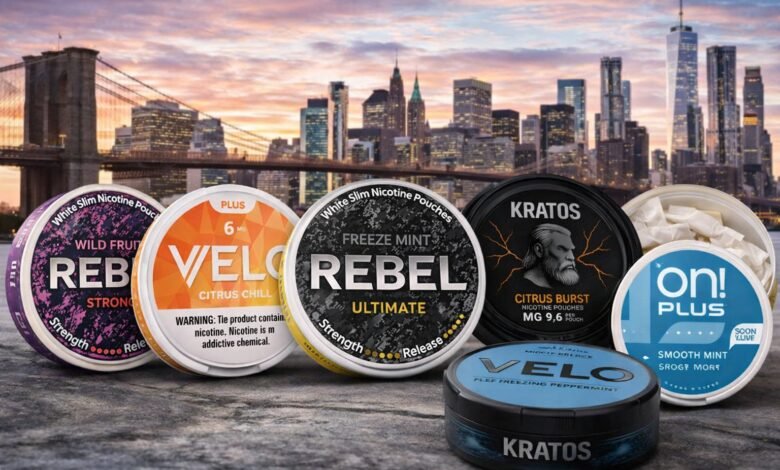
Large multinational brands such as VELO, ZYN, and On! have contributed to mainstream visibility for nicotine pouches in multiple regulated markets, prompting governments to address the category directly rather than treating it as a marginal product.
Alongside these, established international brands including Rebel and KRATOS have played a role in shaping the modern nicotine pouch market through sustained presence, broad distribution, and long term investment in smoke free formats. Operating across regulated environments, such brands reflect the industry’s shift toward quality control, compliance, and adult focused product positioning.
Taken together, these companies illustrate how nicotine consumption is gradually moving away from combustible cigarettes toward alternative delivery systems that remove smoke from the equation.
No Illusions About Risk
UK officials have been careful not to frame nicotine pouches as a solution in themselves. The government has acknowledged that evidence on their effectiveness as smoking cessation tools is still developing, and that using them alongside cigarettes limits potential health benefits.
The emphasis remains on substitution rather than supplementation. The health gains appear most meaningful when smokers switch completely from cigarettes to a smoke free alternative.
That nuance is central to the UK’s approach. It avoids overstating benefits while still recognizing relative risk, a concept that has become increasingly important in modern tobacco control.
Why This Matters Now
Smoking continues to place a heavy burden on public health systems and disproportionately affects lower income communities. Achieving meaningful reductions in smoking rates requires more than warnings and restrictions. It requires alternatives that adult smokers are willing to adopt and that regulators are prepared to manage realistically.
By acknowledging the lower risk profile of nicotine pouches compared to smoking, while committing to firm but proportionate regulation, the UK is reinforcing a policy model that many other countries are watching closely.
The message emerging from Whitehall is not one of endorsement, but of pragmatism. Reduce smoking. Protect young people. Regulate alternatives based on evidence rather than ideology.
As research continues and the regulatory framework takes shape, nicotine pouches are likely to remain part of the broader conversation about how societies move beyond combustible tobacco without creating new public health problems in the process.